
Pippi World: Princess Avatar
Kitten dollEducational
4.263.00 Reviews
- Version
- 3.6
- Installs
- 5.00M
- Age Rating
- Everyone
Screenshots

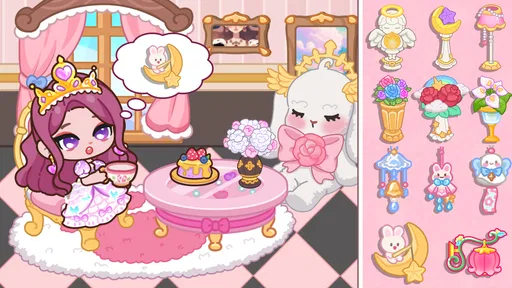




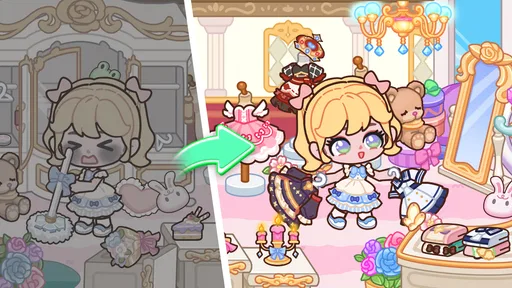

Our Review of Pippi World: Princess Avatar
 Analysis by Appyee
I went into Pippi World: Princess Avatar expecting a light princess-themed activity, and that is exactly where it works best. This is not a demanding adventure with complicated rules. It is a free educational game from Kitten doll built around exploring and decorating a dream castle, with a gentle, imaginative mood that makes it easy to pick up for a few minutes. The appeal comes less from challenge and more from giving children a colorful place to make choices, arrange spaces, and invent small stories.
My first impression was that the game understands its audience. The presentation is friendly, the princess setting is immediately clear, and the controls are approachable enough for a young player to investigate without needing a long explanation. The store summary points toward castle exploration and decoration, but the more important experience is the way those two activities fit together: exploring gives the setting a sense of place, while decorating lets the player leave a personal mark on it.
That makes it suitable for children who enjoy pretend play more than winning. It can also work as a quiet shared activity between an adult and a child. I would not choose it for someone looking for fast action, difficult puzzles, or a strong progression system. I would choose it for a player who likes princess stories, visual customization, and the freedom to decide what a fantasy home should feel like.
How the castle turns decoration into play
The central idea is simple, but it has more value than a basic dress-up screen because the castle gives the imagination a setting to work with. A child is not only choosing an appearance; they are thinking about rooms, spaces, characters, and the kind of story that might happen there. Even when the actions are straightforward, the context encourages role-play.
I found that the game is most enjoyable when treated as an open-ended activity rather than something to finish quickly. A player can explore first, notice the available spaces, and then decorate with a particular idea in mind. For example, instead of placing items randomly, a child might decide that one area is for royal celebrations and another is a quiet room for reading or resting. That small change in approach makes the experience feel more intentional.
The strongest feature is the connection between setting and self-expression. Decoration is not presented as a separate menu task that interrupts the game. It belongs to the fantasy of living in the castle. This is a useful distinction for parents choosing between a creative game and a conventional princess title that mainly follows scripted scenes.
The educational label should also be understood in the right way. This is not the kind of educational game I would use to practise spelling, arithmetic, or formal lessons. Its learning value is closer to decision-making, visual organization, imaginative storytelling, and basic digital navigation. Children can practise choosing between alternatives, noticing how objects fit into a space, and explaining why they arranged a room in a certain way.
That makes it especially useful during a short break when a child wants screen time but an adult would prefer something calmer than a combat game or an endless runner. I can imagine handing it to a child after school and then asking them to describe their castle. The conversation that follows may be more valuable than the individual decoration actions, because it encourages the child to put their choices into words.
A first session that works better with a little guidance
Although the game is approachable, younger players may still benefit from an adult sitting with them during the first session. I would not take over the controls. Instead, I would ask simple questions: Which part of the castle do you want to change first? What should this room be used for? Does the arrangement feel busy or calm? These prompts turn passive tapping into a small creative exercise.
Once the child understands the basic relationship between exploring and decorating, it becomes easier to leave them to experiment. The best workflow is to avoid trying to make everything perfect immediately. Explore, make one or two changes, look at the result, and then revise. That loop gives the game a natural rhythm and prevents decoration from becoming a one-time task.
One practical tip is to encourage a theme before making lots of changes. A royal party, a peaceful bedroom, or a colorful play space gives the child a reason for each choice. This is a more rewarding way to use the game than simply filling every available area as quickly as possible. It also creates a clear stopping point: once the theme feels complete, the player can take a break and return later with a new idea.
The visual language is soft, clear, and intentionally familiar
The art direction does much of the work in establishing the mood. Princess imagery, a dream castle, and decorative spaces create a world that feels safe and easy to understand. The visual language does not ask the player to decode complicated lore before playing. A child can recognize the fantasy immediately and begin making choices within it.
I like that the setting supports calm attention. A busy interface or overly aggressive visual style would work against the decorating idea, while a plain menu-driven presentation would make the castle feel lifeless. Here, the fantasy framing gives ordinary actions—moving around, selecting, arranging—a reason to matter.
The castle is also important because it provides continuity. In a collection of unrelated mini-games, a child may jump from one activity to another without building a sense of ownership. A shared setting makes the experience feel more coherent. Even a small change can feel meaningful when it happens inside a place the player has already explored.
There is a trade-off, though. Players who need constant novelty may find the gentle visual approach limited. The game’s charm depends on enjoying the same fantasy space from different angles, not on receiving a new high-intensity surprise every few seconds. If your child quickly loses interest in decorating once the first room looks finished, the castle may not provide enough momentum on its own.
Sound and pacing keep the experience from becoming stressful
The overall rhythm is more important here than speed. The game is built for stopping and starting, which suits children who may play briefly rather than sit through a long session. Exploration can lead into decoration, and decoration can pause while the player simply looks at the result. That breathing room supports the dreamlike setting better than a countdown or a demanding chain of objectives would.
I see this as a good choice for a quiet part of the day. It is better suited to a relaxed afternoon than to a child who wants a burst of competition. The pacing gives the player permission to think, change their mind, and try again. That is particularly helpful for creative play, where the first arrangement is rarely the best one.
Sound contributes to that impression by helping the castle feel like a place rather than a collection of buttons. I would not describe the audio as the main reason to play, but it supports the soft fantasy tone instead of pulling attention toward pressure or urgency. The result is a coherent mood: the art invites imagination, the setting gives it a home, and the rhythm leaves enough space for the player to decide what happens next.
Parents should still treat it as an interactive game rather than background entertainment. The calm pace may make it feel passive, but children get more from it when they actively explain their choices and revise their designs. A useful routine is to let the child play independently for a while, then ask them to show one area they changed and tell you the story behind it.
Where the mechanics fit, and where they may feel light
The mechanics are intentionally accessible. Exploring and decorating are easy to understand, which is a strength for the intended audience. A child does not need to memorize complex controls before reaching the creative part. The game also avoids making the castle feel like a test that must be completed correctly. That freedom is central to its appeal.
At the same time, accessibility means there is less mechanical depth than in a strategy game, a construction simulator, or a puzzle title. I would not recommend it to a child who wants layered objectives, difficult problem-solving, or a sense of mastery based on skill. The reward is the finished scene and the story the player invents, not a demanding system that keeps escalating.
This is where comparison with usual alternatives becomes useful. A traditional princess dress-up game may focus almost entirely on changing a character’s appearance. Pippi World: Princess Avatar gives decoration a larger environment, so the player can think about how a whole place looks and functions. A puzzle game may offer clearer goals and stronger feedback, but it usually leaves less room for personal interpretation. A sandbox title may provide more freedom, yet it can also overwhelm younger players with too many systems.
In that middle ground, this game is easiest to recommend to families who want a guided creative space. It has enough structure to give the child a recognizable activity, but not so much structure that every choice feels predetermined. The trade-off is that the experience depends heavily on the child’s imagination. Two players may get very different amounts of enjoyment from the same castle.
One less obvious way to use it is as a planning exercise. Before touching the screen, ask the player to describe a room they want to create. Then let them look for ways to express that idea in the castle. This turns the game into a small lesson in translating a mental picture into visible choices. It also helps children who tap randomly at first and then complain that the result does not look right.
Another useful approach is to make a “before and after” story without treating it as a formal challenge. Let the child describe what a space is like before decorating, make a few changes, and then explain how the room’s purpose has changed. This encourages observation and sequencing while keeping the activity playful. It is a stronger use of the game than simply asking whether the castle looks pretty.
Device fit, age suitability, and everyday use
The game is available free of charge and is rated for Everyone, which makes it easy to consider for a family device. It runs on Android devices using version 6.0 or later. The current version is 3.6, and the game has been available since August 30, 2024. Those details matter when deciding whether an older phone or tablet can handle the installation.
Its audience reach is substantial, with more than five million installs and an average score of 4.2 from roughly five thousand six hundred ratings. I take that as a sign that the basic concept connects with many players, while the score also suggests it is not a perfect fit for every child. The review count is around sixty, so I would put more weight on the hands-on style of play than on a small set of written opinions.
For an everyday scenario, imagine a child waiting during a family appointment or settling down after a busy day. This game can fill a short window without demanding that the player remember a complicated storyline. The child can explore, adjust a space, and stop when they are ready. That flexibility is more practical than a game that punishes interruption or requires a long uninterrupted session.
I would be more cautious about choosing it for a child who becomes frustrated when a game offers few explicit goals. In that case, a puzzle game with clear levels may be a better match. I would also skip it for older players who expect detailed simulation, competitive progression, or a large adventure. The princess theme and gentle mechanics are deliberate, not signs that the game is hiding a more advanced experience underneath.
Storage and device performance can still affect the experience, especially on older hardware, so I would install it before promising it as a travel activity. The minimum operating system requirement is useful, but compatibility is only one part of comfort; a child also needs a screen size and touch response that make decorating easy to control. A tablet is likely to feel more natural for arranging a castle than a very small phone screen.
What makes the mood coherent
The best quality here is consistency. The princess setting, castle, decoration, and unhurried rhythm all point in the same direction. Nothing in the core idea asks the player to switch suddenly from quiet imagination to high-pressure action. That coherence matters because children can settle into the activity rather than constantly adapting to a new rule set.
The atmosphere also supports repeat visits in a particular way. It is not necessarily the promise of a new dramatic event that brings a player back. Instead, it is the possibility of changing the space, trying a different arrangement, or inventing another story for the same setting. That kind of replay is personal and creative, so it will be strongest for children who enjoy revisiting familiar scenes.
There are limits to this approach. Without a child who likes pretend play, the game may feel too open-ended. Some players need a clear objective to feel that a session has gone somewhere. Others may enjoy the first decorating experiment but have little reason to return once their preferred arrangement is complete. I would judge the game by the child’s play style, not simply by whether they like princess characters.
For adults, the most useful expectation is modest but positive: this is a small creative environment, not a complete learning curriculum. It can support conversations about design, storytelling, choices, and space. It can provide calmer screen time. It can also give a child a place to practise making decisions without the fear of failing a difficult level.
My recommendation after spending time with it
Pippi World: Princess Avatar is a good recommendation for younger children who enjoy princess fantasy and want to decorate rather than compete. Its free price, Everyone rating, approachable presentation, and castle-centered play make it easy to introduce. The developer, Kitten doll, has built the experience around a clear mood instead of trying to combine every possible game style.
I would recommend playing alongside a child at least once, not because the controls are intimidating, but because the game becomes richer when decoration leads to storytelling. Encourage a theme, let the player change their mind, and ask why a particular area belongs in the castle. Those small habits reveal the game’s educational value more clearly than simply leaving it open as a distraction.
I would skip it when the priority is academic practice, challenging puzzles, action, or deep simulation. I would also look elsewhere if the player needs a strong sequence of goals to stay interested. But for a child who likes arranging spaces and building gentle fantasy stories, the lack of pressure is a feature rather than a weakness.
My final view is that the game succeeds because its art direction, sound, setting, and pacing support the same kind of play. It gives children a dream castle to explore and enough creative control to make it feel personal. The mechanics remain light, so expectations matter, but within that scope it offers a coherent, welcoming activity. If your child prefers imagination over competition, this is a worthwhile free game to try.
Verdict
Strengths of Pippi World: Princess Avatar
- Simple avatar creation is suitable for younger children.
- Bright visuals and friendly characters make the app inviting.
- Many activities encourage imaginative role-play.
- Easy controls work well on phones and tablets.
- Offline play can be convenient when no connection is available.
Limitations of Pippi World: Princess Avatar
- Some items or features may require in-app purchases.
- The gameplay can feel repetitive after extended sessions.
- Limited challenge may not appeal to older children.
- Ads or promotional content may interrupt the experience.
- Privacy settings should be checked before letting children play.
Other Releases by Kitten doll
View All
Pippi World :Avatar Life
Educational4.1

Ayla World :Avatar City
Role Playing4.1
Similar Picks in This Category
View All
Little Panda Policeman
BabyBus4.0

Monster Trucks Game for Kids 2
Raz Games4.1

Little Panda's Chinese Recipes
BabyBus4.4

Little Panda's Restaurant
BabyBus4.4

Little Panda's Ice Cream Games
BabyBus4.3

Baby Panda Care
BabyBus3.8
Frequently Asked Questions
What is Pippi World: Princess Avatar?
Pippi World: Princess Avatar is a creative dress-up and role-playing game centered on designing princess-style characters and exploring imaginative scenes. Players can customize avatars with different hairstyles, outfits, accessories, and visual details, then create stories through casual interactions. It is aimed mainly at children and younger players who enjoy fashion, decoration, and open-ended pretend play rather than competitive challenges.
How does the character customization work in Pippi World: Princess Avatar?
The game provides a selection of princess-themed clothing, hairstyles, accessories, and appearance options that can be combined to create a personal avatar. After choosing a look, players can place or use the character in available environments and build simple stories around it. The experience is designed to be easy to understand, although the number of available items and scenes may depend on the version installed or optional in-app content.
Is Pippi World: Princess Avatar suitable for children?
Pippi World: Princess Avatar is generally presented as a child-friendly creative game, with simple controls and content focused on costumes, characters, and imaginative play. However, parents should still check the app’s current age rating, advertising practices, privacy information, and purchase settings before allowing independent use. If the game is played on a shared device, parental controls can help restrict downloads and accidental purchases.
Does Pippi World: Princess Avatar require an internet connection?
Some parts of Pippi World: Princess Avatar may work without a constant internet connection after the application has been installed, especially basic character creation and previously available content. Nevertheless, internet access can be required for downloading updates, loading advertisements, restoring purchases, or accessing newly added features. Availability may also vary by device and version, so users should test offline functionality after installation rather than assume every feature works offline.
Is Pippi World: Princess Avatar free to download and does it include purchases?
The game may be available as a free download, but free access does not necessarily mean that every outfit, accessory, location, or feature is unlocked. Depending on the platform and current release, the app may include advertising, optional in-app purchases, or extra content packs. Before downloading, review the Google Play or App Store listing for the latest pricing details, then enable purchase authentication if children will be using the device.
Play our best games!


